The camera on my garage wall recorded 22 minutes of a blurry raccoon and one dark shape that never turned into a face. The detective was polite about it. No face, no case. Insurance watched the raccoon, asked a few follow-up questions, and denied most of the claim. So when I sat down to write a home security camera comparison that would actually be worth reading, I started from the only question that has ever mattered to me: if this thing catches someone in my driveway at 2 AM, can I hand the police a clip with a face in it?
This is a comparison of four very different answers to that question. Two are camera systems, one is a door lock, and one is a baby monitor that earned a place on the list because a surprising number of people are using a baby monitor as a security camera and then wondering why it lets them down.
If you own your home and can run a cable, the eufy 4-Camera Kit with the 1TB hard drive is the pick, because the storage comes in the box and nobody can charge you a monthly fee to watch your own driveway. If you rent, or you need cameras working tonight without touching a drill, the Blink Outdoor 4 five-camera system is the practical answer. The door lock gives you the single best view in the house. The baby monitor is exactly what it says it is, no more, and that is fine as long as you know it.
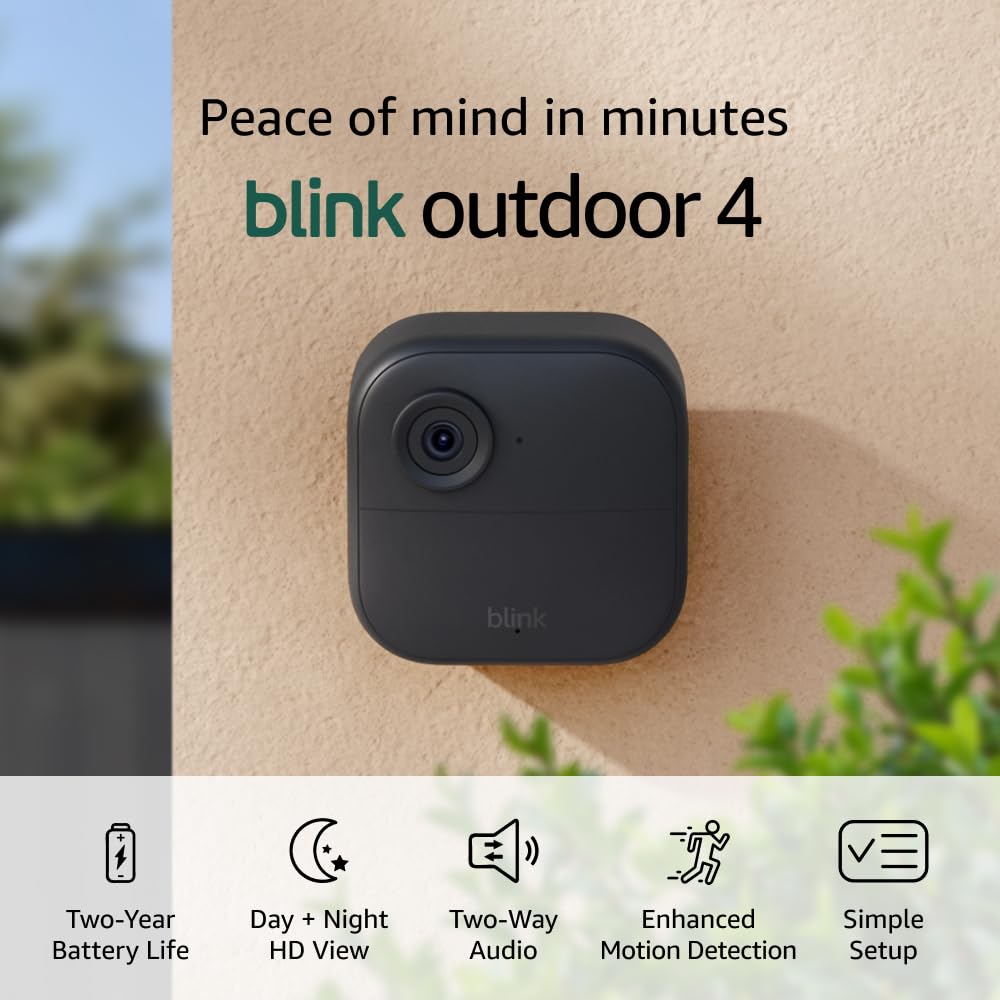
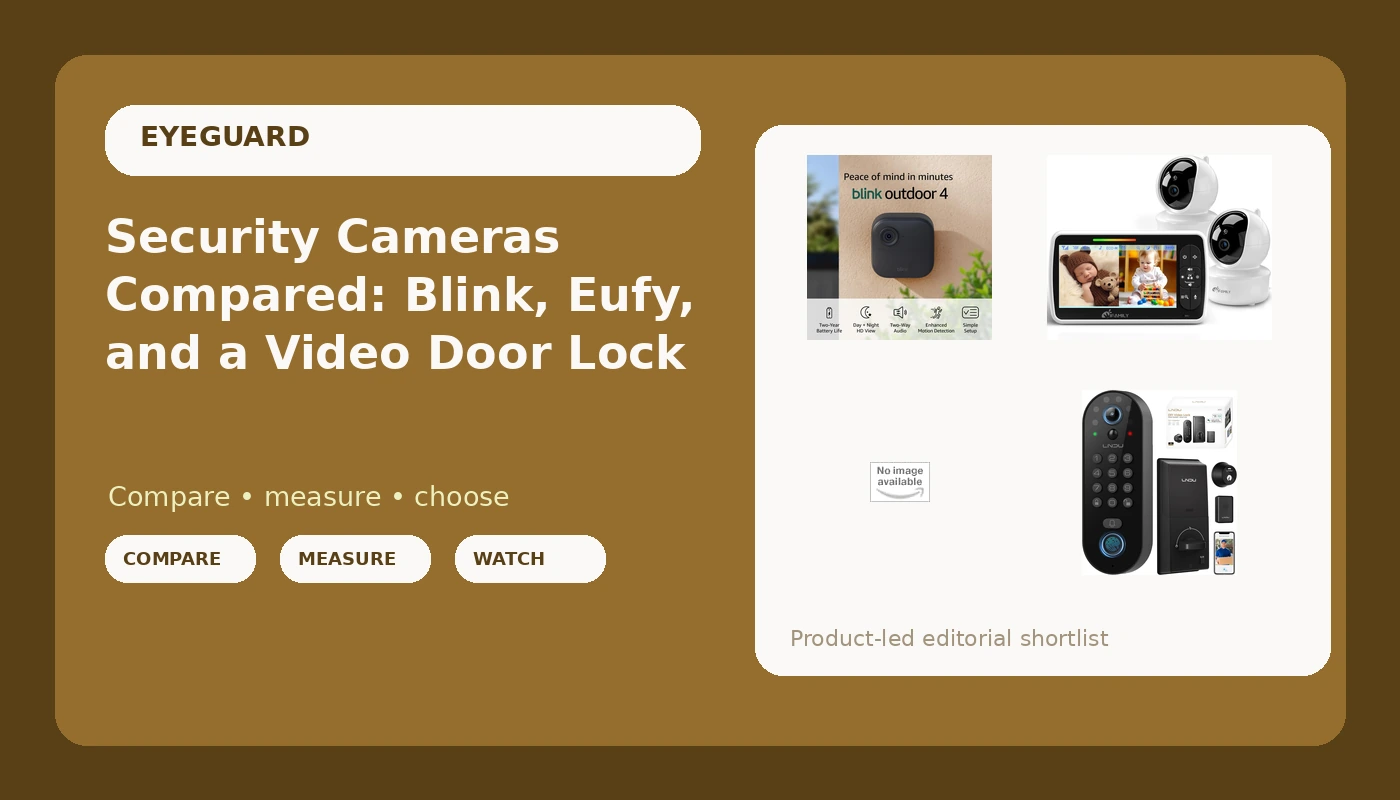
Blink Outdoor 4, 5-Camera Wireless System
Five cameras on battery power, two-year battery claim, no wiring, 1080p day view, infrared night view, two-way talk
1080p only, and the useful clip history lives in the cloud, which is a subscription conversation

eufy 4-Camera Kit with 1TB Hard Drive
The storage ships in the box, so footage lives in your house and replaying it is not a monthly fee
Wired install: drilling, cable runs, and finding a home for the hub and drive
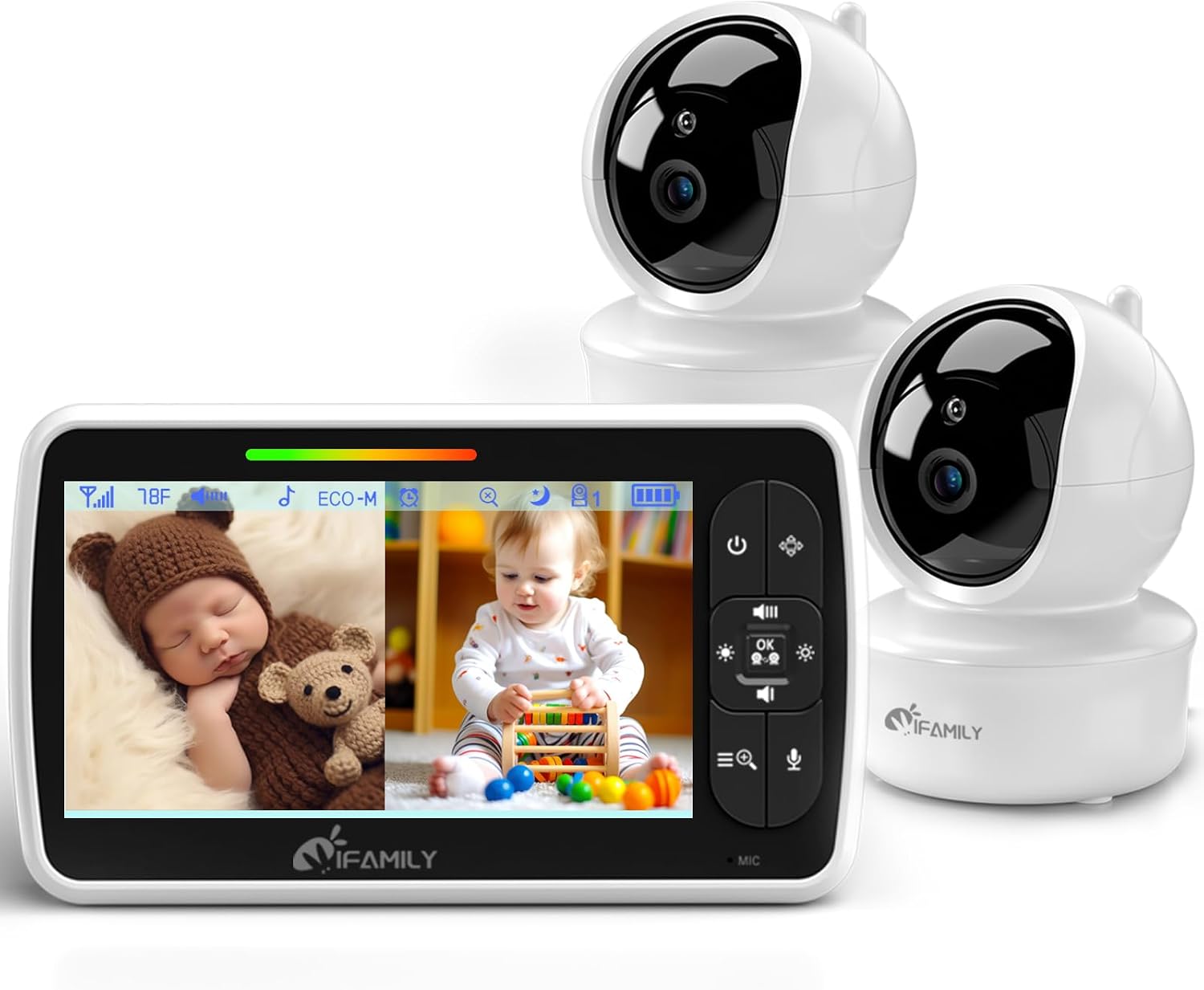
iFamily 5 Inch Split Screen Baby Monitor with 2 Cameras
Dedicated 5 inch screen, two cameras at once, night vision, audio, no app and no subscription
It is an indoor monitor, not a perimeter camera: no phone alerts, no person detection for a driveway
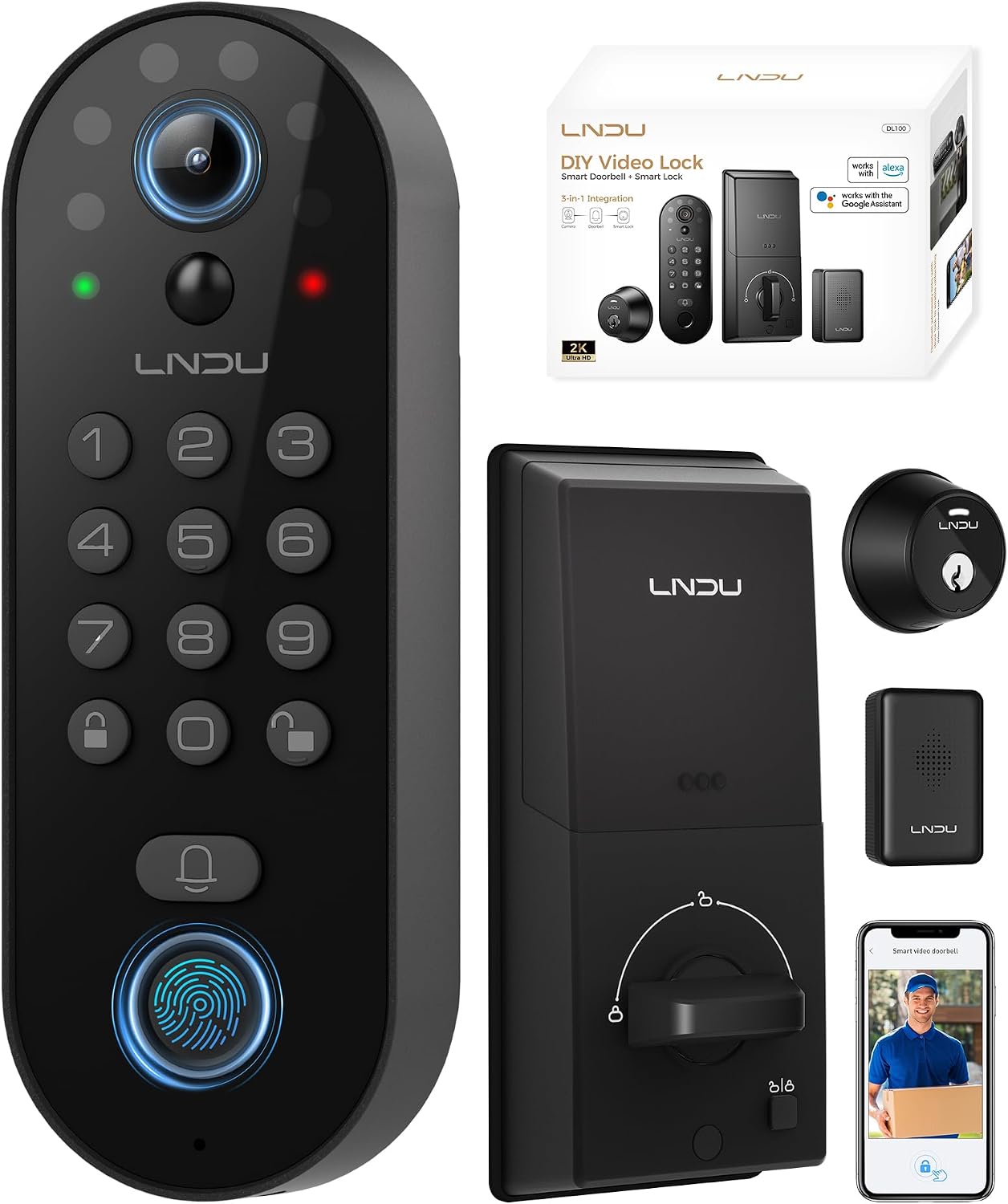
Smart Video Door Lock with 2K Camera, Fingerprint and Keypad
A 2K camera at face height, plus keypad and fingerprint entry, which is the one angle where identification actually happens
One door, no yard coverage, and it is a lock first and a camera second
Prices and availability were captured from Amazon Creators API and may change.
How these four got compared
Every camera that comes through this house gets mounted on the same garage wall, at the same height, under the same lighting. I put a target at 10 feet, then 20, then 30, and I ask the same question at each distance: is there a face here, or just a shape? Then I leave it up for a full week and log every single alert, because a camera that cries wolf four times a night is a camera you will mute by Friday, and a muted camera protects nothing.
I also do the boring math. Hardware price, plus whatever plan is required to make the hardware useful, multiplied across three years. The subscription is the real price. The hardware is the down payment. Any camera that only makes sense with a monthly plan gets that plan written next to its name in my notebook, and any claim about free storage gets checked against what you can actually export and keep.
Finally, where does the footage live? In your house, on a drive you own, or in a vendor's cloud, subject to someone else's legal requests and retention rules? That question decides more of this comparison than resolution ever will.
The wireless option: Blink Outdoor 4, five cameras on battery
Blink's whole argument is installation. Five cameras, no wires, a two-year battery claim per set, 1080p in daylight, infrared at night, and two-way talk so you can tell someone to leave. For a renter, or for a house where the only realistic cable run goes through a finished ceiling, that is not a small thing. The best camera is the one you actually install, and a wireless system gets installed the same afternoon it arrives.
What you give up is detail. 1080p is fine for recognizing a person you already know and for confirming that someone walked up your steps. It is not the resolution I want when the question is who was that. At night, infrared gives you a shape and motion, and shape plus motion is exactly what produced my raccoon footage.
The other catch is the plan. Blink's useful history lives in the cloud, and cloud history is a subscription conversation, which is the math I warned you about two paragraphs ago. Local storage exists on some Blink configurations, so read the specifics of the bundle you are buying rather than trusting the picture on the box.
Who it is for: renters, cabins, and anyone who needs coverage across five angles this weekend rather than this month.
The local storage option: eufy 4-Camera Kit with 1TB drive
This is the one I would put on my own house if I were starting from zero and owned the walls. Four cameras and a 1TB hard drive, which means the recording lives on a drive inside your house. No monthly fee to replay yesterday. No vendor deciding how long your clips survive. If your footage matters, it should live somewhere you control, and this kit is the only thing on the list that ships with the storage included.
Four cameras covers the practical set: front door approach, driveway, side gate, back door. That is the standard perimeter, and it is the set that catches the path a person actually takes through a yard.
The cost is installation. You are drilling holes, running cable, and finding a home for the hub and the drive. That is an afternoon with a ladder, a drill, and someone holding the other end of the cable. It is not difficult, but it is real work, and it is the reason people buy battery cameras instead and then resent the subscription they were warned about.
Night performance is where the cable pays you back. A wired camera can run a stronger illuminator and a better sensor than a battery camera that has to ration power, so the useful identification range tends to be longer. Test it at your own gate before you trust it.
The one that is not really a security camera
I include the iFamily 5 inch split screen monitor because it keeps landing in the same shopping carts as the cameras, and because the honest answer is that it does a different job well. Two cameras, a dedicated 5 inch screen, night vision, audio, and a split view so you can watch two rooms at once. No app, no Wi-Fi, no account, no subscription, and nothing sitting on the internet waiting to leak. For a nursery, or for keeping an eye on an elderly parent in the next room, that is a genuinely better design than a cloud camera.
It is not a perimeter camera. It will not push a phone alert when someone walks up your driveway. It will not record a week of clips you can hand to a detective. It does not have person detection tuned for the street. If you mount one on your garage expecting security footage, you will get the raccoon experience I already had, and you will have paid for it twice.
Buy it for the job it was built for, indoors and close, and buy a real camera for the outside. There is no shame in owning both. There is a lot of shame in calling one the other.
The best single view in the house: 2K video door lock
Faces happen at the door. That is the entire argument for a video door lock with a 2K camera, a fingerprint reader, and a keypad. A door camera sits at roughly chest to face height, five or six feet from where a visitor stands, which is the ideal geometry for identification. Compare that to a camera mounted under the eaves at 20 feet, looking down at the top of a hood.
The 2K sensor matters more here than it would in a wide yard shot, because the subject is close and the frame is tight. Add fingerprint entry and a keypad and you also retire the spare key under the flowerpot, which is a break-in shortcut I have watched get used twice on my block.
What it does not do is cover the yard. It is one door and one angle. It will not tell you that someone was in the side yard ten minutes before they knocked. It also means your lock and your camera are now the same device, so a dead battery or a bad firmware update affects entry, not just footage. Keep a mechanical key somewhere real, and do not let this be your only camera.
As an addition to a system, though, it is the highest value camera you can add, because it covers the moment that matters most.
The three-year cost math
Here is the test I apply to every camera, and it is the reason I will not print a hardware price next to any of these. Check the current Amazon price, then add three years of whatever plan is required to make the thing useful, then decide whether you still like the number.
The eufy kit records locally, so its three-year number is close to its hardware number. The iFamily monitor has no plan at all, which makes it the cheapest thing on this list to own and the least capable outdoors. Blink's cloud history is where the useful features live, and that is a recurring line item, so its three-year number runs meaningfully higher than the sticker suggests.
I am not against subscriptions. I pay for one myself, a rule I broke after the break-in and have not fully made peace with. I am against buying a camera without doing that arithmetic first, because the monthly fee is the part people forget and then resent for years.
Write the three-year number on a sticky note before you check out. If it surprises you, that surprise is the answer.
What the table will not tell you
The table gives you the shape of each product. It cannot give you the three things that decide whether you will still like it in March.
First, false alerts. Person detection that only works in daylight will hand you a week of car headlights and spider webs, and then you will turn notifications off. A muted camera is not security. This is the number one reason people quietly stop trusting a system they paid for.
Second, night identification range at your house. Every yard is different. A camera that reads a face at 20 feet in my alley might be useless under your porch light, or better in your open driveway. Test at 10, 20, and 30 feet with a real person standing still, then decide. Anything past the distance where a face stops being a face is decoration.
Third, install friction. The eufy kit will outperform the Blink system at night and it will still lose if it stays in the box because you never got around to the cable run. A camera mounted badly beats a camera mounted never, every single time.
What I would actually buy
If you own your home and can run a cable: the eufy 4-Camera Kit. Storage in the box, four angles, no subscription to replay your own footage. Add the video door lock at the front door for the one view that identifies a face.
If you rent, or you need coverage tonight: the Blink Outdoor 4 five-camera system. Accept the resolution compromise and the plan, and get five angles installed the same day it arrives.
For a nursery or an indoor room: the iFamily split screen monitor, and stop trying to make it do a job it was not designed for.
The uncomfortable part is that none of these replaces the boring work. Trim the bush that hides your side gate. Put a real deadbolt on the door with the flimsy strike plate. Talk to your neighbor about their camera angle, because their view of the street may be better than anything you can mount on your own house. A camera tells you what happened. It does not stop anything. The version of me that learned that was standing in a cold garage at 3 AM, watching a raccoon.
What I am testing next
I currently have nine cameras mounted across the garage and the back fence, targets at 10, 20, 30, and 50 feet, and a running tally of every raccoon that trips a person alert. The next report covers night face identification distance per dollar, because that is the only spec that has ever mattered to me, and which of these systems keeps recording when the Wi-Fi drops, which is the failure mode nobody tests until the night they actually need it.